
Keeping blood sugar levels stable after meals is one of the most effective strategies for supporting metabolic health, preventing energy crashes, and reducing the long-term risk of type 2 diabetes and cardiovascular disease.
Fortunately, you don’t need extreme diets or calorie counting. Decades of nutrition science support a simple, balanced plate approach that helps reduce post-meal glucose spikes.
Why Blood Sugar Balance Matters
After eating, carbohydrates are broken down into glucose and absorbed into the bloodstream. Rapid increases in blood sugar trigger large insulin responses and, over time, may contribute to insulin resistance and metabolic dysfunction.
Multiple studies published in journals such as Diabetes Care and The American Journal of Clinical Nutrition show that reducing postprandial glucose excursions improves glycemic control, insulin sensitivity, and cardiometabolic risk markers.
The Science-Backed Blood-Sugar-Friendly Plate
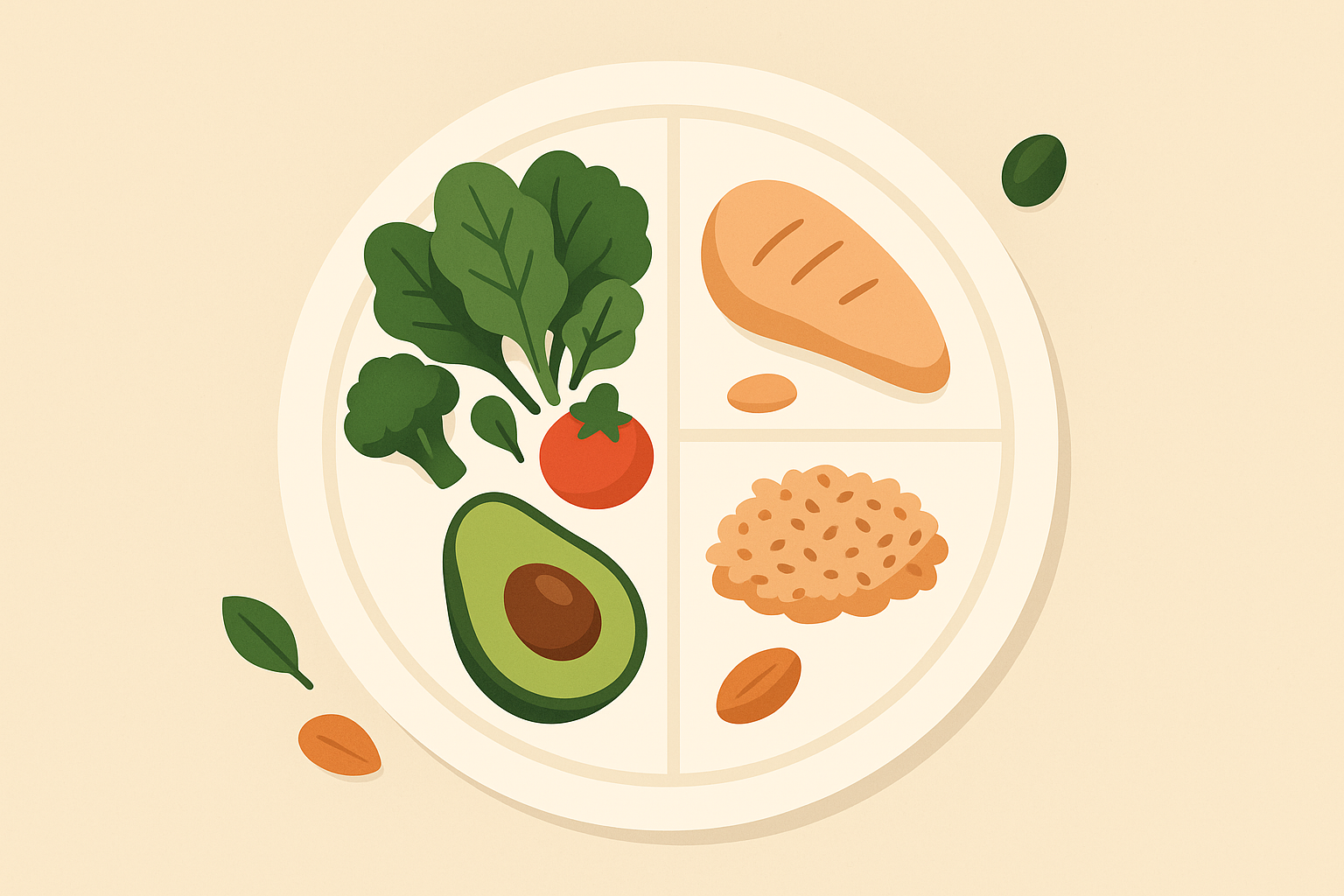
The plate method, widely recommended by the American Diabetes Association, is a practical way to structure meals for better glucose control.
Ideal Plate Breakdown
- ½ plate: Non-starchy vegetables
- ¼ plate: Protein
- ¼ plate: Low-glycemic carbohydrates
- Plus: Healthy fats and fiber
This structure lowers the overall glycemic load of a meal and slows glucose absorption, a concept supported by controlled feeding trials.
1. Fill Half Your Plate with Non-Starchy Vegetables
Examples include leafy greens, broccoli, cauliflower, zucchini, peppers, tomatoes, and cucumbers.
Non-starchy vegetables are low in digestible carbohydrates and rich in fiber and water. Observational studies and clinical trials associate higher vegetable intake with improved insulin sensitivity and lower post-meal glucose levels.
2. Choose Low-Glycemic Carbohydrates (¼ Plate)
Blood-sugar-friendly carbohydrate options include:
- Lentils, chickpeas, and beans
- Quinoa and barley
- Sweet potatoes (moderate portions)
- Whole grains cooked al dente
Meta-analyses published in Diabetes Care show that low–glycemic index (GI) diets significantly reduce HbA1c and postprandial glucose compared to high-GI diets, particularly in people with insulin resistance or type 2 diabetes.
3. Add a High-Quality Protein Source (¼ Plate)
Protein sources include fish, poultry, eggs, Greek yogurt, tofu, tempeh, and legumes.
Experimental studies demonstrate that adding protein to a carbohydrate-containing meal reduces post-meal blood glucose levels by slowing gastric emptying and enhancing insulin response. This effect has been documented in studies published in The American Journal of Clinical Nutrition.
4. Include Healthy Fats
Healthy fat sources include extra virgin olive oil, avocado, nuts, and seeds.
Dietary patterns rich in unsaturated fats—most notably the Mediterranean diet—are associated with improved glycemic control and reduced cardiovascular risk, according to randomized controlled trials published in journals such as Diabetes Care and The New England Journal of Medicine.
5. Don’t Forget Fiber (Especially Soluble Fiber)
Soluble fiber is found in oats, legumes, vegetables, whole fruits, and psyllium husk.
Large meta-analyses published in The Lancet and BMJ report that higher fiber intake is associated with lower fasting glucose, reduced HbA1c, and improved insulin sensitivity.
Practical Strategies to Reduce Blood Sugar Spikes
- Eat vegetables and protein first: Clinical studies show that food order significantly impacts postprandial glucose levels.
- Avoid eating carbohydrates alone: Pairing carbs with protein or fat reduces glucose spikes.
- Control portions: Even low-GI foods can raise blood sugar when consumed in excess.
- Consider a protein preload: Small amounts of protein before meals have been shown to reduce post-meal glucose in controlled trials.
Example Blood-Sugar-Friendly Meals
- Grilled salmon with mixed salad, quinoa, and olive oil
- Chicken stir-fry with broccoli and peppers plus brown rice
- Lentil salad with spinach, tomatoes, olive oil, and boiled eggs
- Vegetable omelet with whole-grain toast and avocado
Final Thoughts
Building a blood-sugar-friendly plate is a science-backed, sustainable approach to eating. By focusing on food quality, balance, and structure, you can support stable energy levels, metabolic health, and long-term well-being.
Scientific References
- American Diabetes Association. Nutrition Therapy for Adults With Diabetes or Prediabetes. Diabetes Care.
- Brand-Miller J et al. Low–Glycemic Index Diets and Glycemic Control. Diabetes Care.
- Reynolds A et al. Dietary Fibre and Cardiometabolic Health. The Lancet.
- Esposito K et al. Mediterranean Diet and Glycemic Control. Diabetes Care.
- Wolever TMS et al. Protein Intake and Postprandial Glycemia. American Journal of Clinical Nutrition.
Leave a Reply