
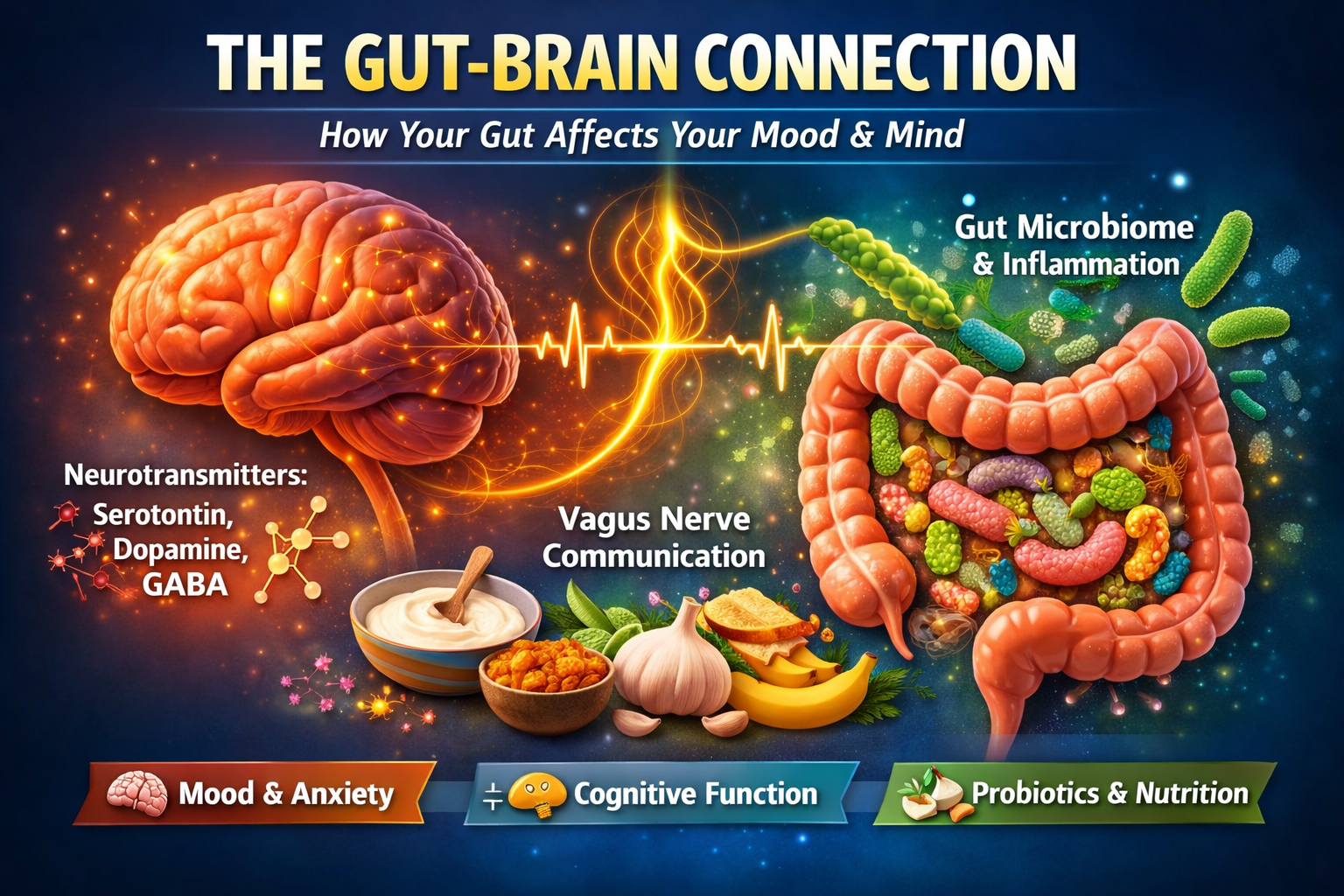
Modern science shows that your gut and brain are in constant communication, a relationship called the microbiota-gut-brain axis (MGBA). Research published in ACS Chemical Neuroscience shows that this bidirectional connection influences not only digestion but also mood, stress response, and cognitive performance (Cryan et al., 2025).
What Is the Gut‑Brain Connection?
The gut-brain axis is the network linking your digestive system with your central nervous system. Research in Nature Reviews Gastroenterology & Hepatology indicates that the vagus nerve acts as a direct communication line between gut and brain (Bonaz et al., 2025), while immune signaling from gut cells can modulate brain function (Frontiers in Immunology, Clarke et al., 2025). Additionally, metabolites produced by gut bacteria, such as short-chain fatty acids, influence hormonal and neural pathways (Molecular Neurobiology, Springer, Silva et al., 2025).
How Gut Microbes Influence the Brain
Microbial Metabolites and Brain Function
Studies published in Molecular Neurobiology show that short-chain fatty acids (SCFAs) like butyrate, produced by gut bacteria, reduce inflammation and can modulate neural signaling, indirectly influencing mood and cognition (Silva et al., 2025).
Neurotransmitter Regulation
Research in the Journal of Open Science of Microbiota demonstrates that gut bacteria metabolize tryptophan, a precursor to serotonin, while also modulating GABA and dopamine levels, which are crucial for stress response and emotional regulation (Strandwitz, 2025). Human trials also show that probiotic supplementation can influence brain activity in regions linked to emotion (PubMed ID 39360283).
Brain Connectivity
A study published in Nature Mental Health shows that gut microbiota composition correlates with functional brain connectivity, particularly in areas controlling emotion and executive function (Li et al., 2023).
Nutrition Strategies to Support the Gut‑Brain Axis
Prebiotics (Dietary Fiber)
Research in Molecular Neurobiology shows that dietary fibers from onions, garlic, bananas, oats, and legumes feed beneficial gut bacteria and increase SCFA production, supporting gut-brain communication (Silva et al., 2025).
Probiotics (Fermented Foods / Supplements)
Clinical trials published in PubMed ID 39360283 indicate that fermented foods like yogurt, kefir, kimchi, and sauerkraut introduce beneficial microbes that improve emotional processing and reduce stress responses (Mayer et al., 2025).
Anti-Inflammatory Diet
Studies suggest that diets rich in fruits, vegetables, omega-3 fatty acids, and polyphenols help maintain microbial diversity and reduce inflammation, supporting healthy gut-brain signaling (Silva et al., 2025).
Final Thoughts
Research published in ACS Chemical Neuroscience shows that the gut-brain axis is a scientifically validated communication network linking gut microbes, immune signals, and neural pathways to the brain (Cryan et al., 2025). Studies in Frontiers in Immunology and Nature Mental Health confirm that probiotics and prebiotics can modulate emotional processing, while dietary fiber and fermented foods support microbial balance and cognitive function (Clarke et al., 2025; Li et al., 2023).
Supporting your gut health is not just about digestion — it’s a strategy to improve mental clarity, mood regulation, and emotional resilience.
Scientific References
- Cryan, J. F. et al. (2025). The microbiota-gut-brain axis: From basic mechanisms to clinical applications. ACS Chemical Neuroscience.
- Bonaz, B. et al. (2025). The vagus nerve at the interface of the microbiota-gut-brain axis. Nature Reviews Gastroenterology & Hepatology.
- Clarke, G. et al. (2025). Gut microbiota: The immune connection. Frontiers in Immunology.
- Silva, Y. P. et al. (2025). Short-chain fatty acids and neural signaling in the gut-brain axis. Molecular Neurobiology, Springer.
- Strandwitz, P. (2025). Neurotransmitter modulation by gut microbiota. Journal of Open Science of Microbiota.
- Mayer, E. et al. (2025). Probiotics and brain activity: Clinical fMRI evidence. PubMed ID 39360283.
- Li, H. et al. (2023). Gut microbiota composition predicts brain connectivity patterns. Nature Mental Health.
Leave a Reply